
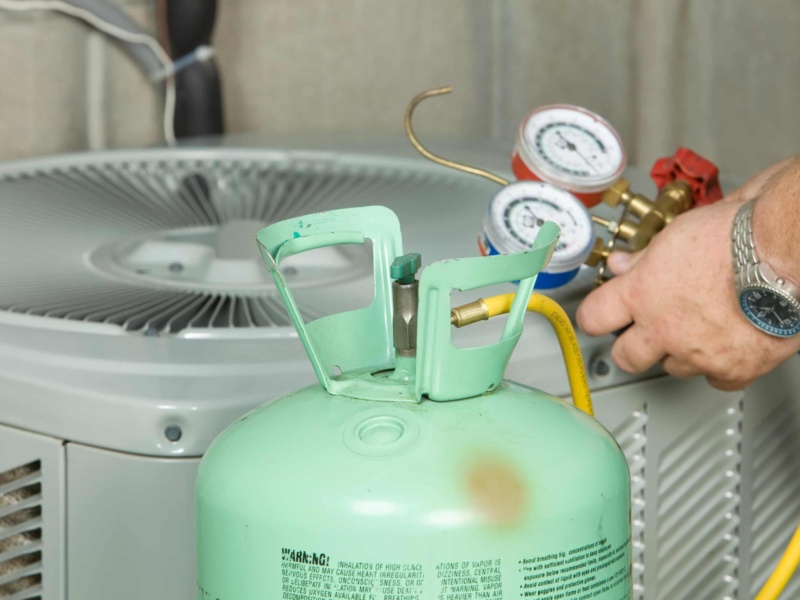
If you own or manage property in Missouri or Kansas, 2026 brings important changes to how cooling systems use and manage AC refrigerant under new federal rules. These updates aim to cut climate‑warming hydrofluorocarbons (HFCs) while still keeping homes and businesses comfortable.
What’s Changing with AC Refrigerant in 2026
Under the federal AIM Act, the EPA is phasing down HFCs, the most common type of AC refrigerant used in many existing systems. Beginning in 2026, stricter limits on high–global warming potential (GWP) refrigerants take effect for newly manufactured and installed equipment, pushing the market toward lower‑GWP alternatives.
For most MO and KS customers, this means:
- New systems will increasingly use lower‑GWP refrigerants
- Manufacturers must meet federal refrigerant GWP limits
- Contractors must follow updated installation and handling rules
- Supply of older HFCs will continue to tighten over time
- More emphasis on proper AC maintenance to prevent leaks
What the Rules Mean for Your Current AC Unit
These rules focus mainly on new equipment, not the systems already running in your home or business. In most cases, you can continue using and servicing your existing unit that uses an older AC refrigerant as long as it remains in good working order.
However, owners should know that:
- Older units may rely on refrigerants that become more expensive over time
- Leak detection and repair rules are tightening for certain systems
- Replacement parts and compatible refrigerants may become harder to source later in the decade
How AC Refrigerant Rules Affect Repair and Recharge Costs
As HFC production and consumption are reduced by 85 percent by 2036, refrigerant prices are expected to rise, especially for older blends. That can make a simple top‑off of AC refrigerant or a leak repair more costly than in years past, particularly if multiple service calls are needed.
When you compare rising AC replacement costs to recurring repair bills, the math may favor upgrading to a newer, more efficient system that uses an approved low‑GWP refrigerant.
When to Repair vs. Replace Under the New Refrigerant Rules
The new rules don’t automatically force you to replace a working unit, but they do change the long‑term cost picture. It may be wise to discuss replacement when:
- Your system is 10–15+ years old
- You’ve had recurring refrigerant leaks
- Repair estimates approach a significant share of the AC replacement cost
- Energy bills are creeping up despite regular AC maintenance
- You want to lock in newer technology before standards tighten again
A newer system designed for next‑generation AC refrigerant can reduce energy use and future compliance headaches.
How a Spring AC Checkup Helps You Plan Ahead
Spring is the ideal time to schedule AC maintenance before heavy cooling demand hits. A professional inspection can check refrigerant levels, look for leaks, clean coils, verify airflow, and flag issues that may affect compliance with the 2026 rules.
A thorough visit should include:
- Checking refrigerant levels and inspecting for leaks
- Cleaning indoor and outdoor coils
- Replace air filters for proper airflow
- Testing thermostats and electrical connections
- Reviewing system age, efficiency, and future options
Call Harris Heating & Air to get Ready for 2026
If you are unsure how the new EPA rules affect your system, Harris Heating & Air is ready to help you make a clear, no‑pressure plan. Their technicians can inspect your equipment, recharge AC refrigerant when appropriate, complete needed repairs, and walk you through AC replacement cost and efficiency options tailored to your property.
Whether you need routine AC maintenance, troubleshooting, or a full upgrade, call Harris Heating & Air today at (417)-310-0132 if you live in Webb City, Missouri, or ring us at (620)235-9117 if you live in Pittsburg, Kansas to schedule your visit and get ahead of the 2026 refrigerant changes with a system you can count on all summer.