
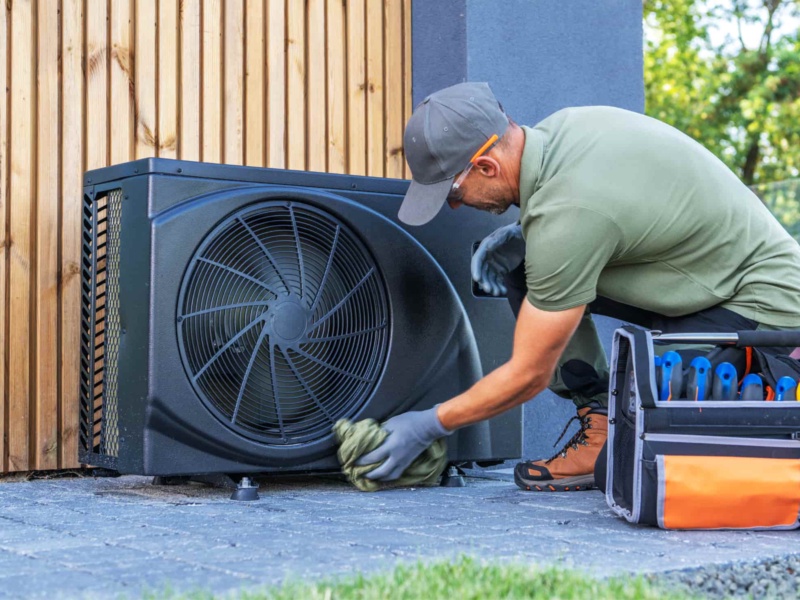
Homeowners and businesses across Joplin and Pittsburg face the same question: Repair the old system, or replace it. Often, the choice comes down to an all-in-one heating and cooling system or a furnace, and the two perform differently across our humid summers and cold snaps.
How a Heat Pump Works
This type of system does not generate heat the way a furnace does. Per the U.S. Department of Energy, it uses electricity to transfer heat from a cooler space to a warmer one, moving warmth indoors in winter and reversing the cycle in summer. One system replaces both a furnace and a separate air conditioner. A gas furnace burns fuel directly, with modern high-efficiency models rated 90 to 98 percent Annual Fuel Utilization Efficiency (AFUE). Even so, heat pump equipment moves existing heat rather than generating it from fuel, letting it deliver more energy as heat than it draws in electricity—a performance edge no furnace can match, no matter how high the AFUE climbs.
Heat Pump Performance in Joplin and Pittsburg
The Four States region sees humid, 90-degree summers and winter cold snaps well below freezing. ENERGY STAR testing for air-source units verifies performance down to 5 degrees Fahrenheit, covering most cold snaps, while the same system handles humid summer cooling without a separate air conditioner. All-electric homes, or homes without a gas line, tend to be the clearest fit.
Heat Pump Cost: Upfront vs. Long-Term Savings
Upfront installation costs are typically higher for a dual-purpose system than for a like-for-like furnace, since the system handles both heating and cooling. The Department of Energy notes that homes with older electric resistance heating use at least twice as much energy as modern equipment, with savings averaging more than $500 a year, depending on home size and climate. The average furnace replacement cost varies by fuel type and AFUE rating, and the replacement cost should be weighed against the remaining service life.
Heat Pump vs. Furnace: Which Fits Your Home?
An older gas furnace still under half its service life, with ductwork and a gas line in place, often makes sense to repair or replace in kind. An all-electric home, or an owner who wants a single system for heating and cooling, is usually a better match for an electric heat-and-cool system. Consider:
- Age and condition of your current system
- Whether your property has an existing gas line
- Local utility rates for electricity versus gas
- How much of the year do you run cooling versus heating
- Your budget for installation versus long-term operating cost
Refrigerant work always requires certified expertise. Under Section 608 of the Clean Air Act (40 CFR Part 82, Subpart F), the EPA requires anyone who services, repairs, or disposes of refrigerant-containing equipment to hold a Section 608 Technician Certification. Harris Heating & Air technicians carry Universal Section 608 certification, the highest level available.
2026 Heat Pump Incentives and Trends
For 2026, the IRS Energy Efficient Home Improvement Credit (Section 25C) remains active for qualifying equipment, offering up to $1,200 per taxpayer per year with no lifetime cap. Starting in 2026, manufacturers must assign a unique 17-character product number to each qualifying unit for the credit. Harris Heating & Air can confirm which models qualify for installation.
If you're a homeowner or business owner in Pittsburg, Kansas, weighing a repair or a furnace replacement, don't wait for the next cold snap or heat wave to find out your equipment can't keep up. Call Harris Heating & Air to schedule a seasonal HVAC check or repair visit, and get a straight answer on what your building needs.
Pittsburg, KS: (620) 235-9117
Webb City, MO: (417) 310-0132