
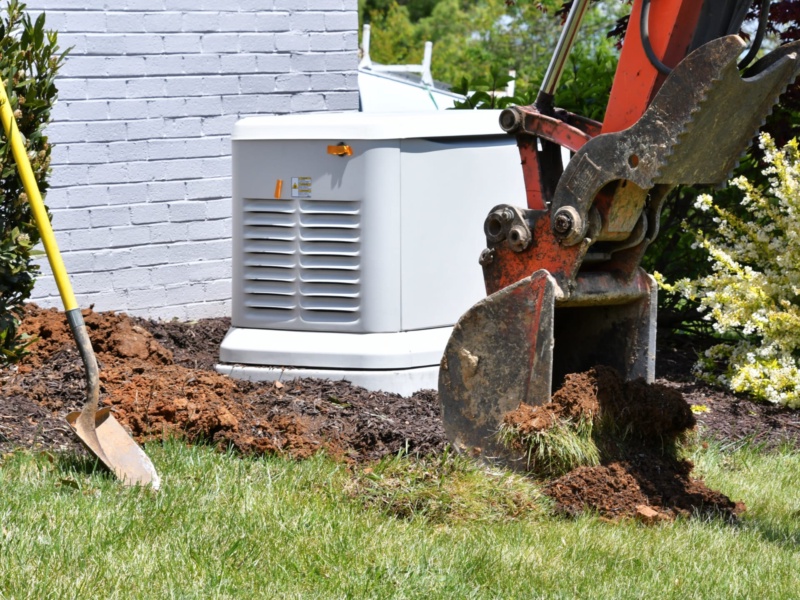
When a storm knocks out the grid or ice takes down a line during a Kansas winter, the first system homeowners and business owners worry about is HVAC. Power outages don't just mean a dark house—they mean a compressor that won't start, right when the weather is at its worst. A whole-home generator keeps the HVAC system running automatically, so comfort never depends on the weather.
Why Power Outages Threaten Your HVAC System
Central HVAC is typically the largest electrical load in a home or business, making it the first casualty when the grid fails. A compressor draws a heavy surge of power just to start, and without backup power, that surge isn't available. The result: No cooling in a heat wave, no heat in a cold snap.
What Your HVAC's Power Draw Is for Properly Sizing a Generator
Not all backup power is equal. Central air conditioners and heat pumps are rated in tons of cooling capacity, and both running wattage and startup surge scale up with tonnage—a 2-ton system and a 5-ton system don't draw close to the same load. Properly sizing whole home generators means accounting for both numbers, not just the nameplate running watts.
Research from the National Renewable Energy Laboratory found that a compressor's inrush current—the surge it draws just to start—runs 6 to 10 times its normal running current. A backup generator for HVAC has to be built to absorb that spike, which is why sizing off running watts alone leaves a generator undersized for the one moment that matters most: The instant the compressor kicks on. Undersize it, and the generator trips or stalls exactly when you need it.
Automatic Transfer Switches: Instant Backup Power
An automatic transfer switch monitors incoming utility power. The moment it senses an interruption, it starts the generator and shifts your electrical load over automatically—no manual switches, no waiting in the dark.
That matters for more than convenience: When utility power comes back on after an outage, every device left running tries to draw power at the same instant, producing voltage transients that inductive motors handle poorly. Research cited by the National Institute of Standards and Technology found that more than 75% of appliance motor failures are caused by transients or overvoltage surges rather than normal wear.
An automatic transfer switch keeps your HVAC compressor on clean, stable generator power for the entire outage, sidestepping that grid-restoration stress rather than exposing your system to it. This switch also isolates your system from the grid, a safety requirement recognized by the National Fire Protection Association to protect line workers restoring power.
What Extended Power Outages Mean for Your Home
A short outage is an inconvenience; an extended one is a different problem. Research from the National Renewable Energy Laboratory found that a typical home with no backup power can cross an unsafe indoor temperature threshold in as little as two hours during a winter storm, and around 12 hours during a heat wave, before any added insulation is factored in.
Diesel generator and propane generator systems both close that gap by keeping HVAC running instead of racing the clock. Propane generator sizing matters here too: Fuel in a sealed tank doesn't degrade the way diesel can, making it dependable for systems that sit unused for months.
Health and Comfort Risks When HVAC Loses Power
The stakes go beyond comfort. The CDC reports more than 700 people die from extreme heat in the U.S. every year, and adults 65 and older are especially at risk since their bodies regulate temperature less effectively.
One 2023 study found a five-day outage during extreme heat in Phoenix could send half that city's population to the emergency room. Losing HVAC during power outages isn't just uncomfortable for kids, elders, and pets—it can be dangerous.
Before you invest, weigh these factors:
- Standby generator cost versus the cost of a surge-damaged compressor or a medical emergency
- Fuel type—propane generator versus diesel generator—based on storage space and runtime
- Correct sizing for your HVAC's tonnage and startup surge
- Automatic transfer switch placement, which must meet local electrical code
Pittsburg, Kansas, homeowners and businesses don't have to wait for the next outage to find out their HVAC isn't ready. Whether it’s time for a seasonal HVAC check-up or you need an immediate HVAC repair, Harris Heating & Air is ready to help. Call us today to schedule your HVAC maintenance appointment. They can also help you better understand what your HVAC needs are before you invest in a whole-home generator.